In offshore energy development, safety and efficiency are critical for transportation operations. The Catenary Anchor Leg Mooring (CALM) system serves as core equipment for offshore crude oil loading and unloading, playing a vital role in the offshore oil‑gas transportation chain.
The CALM system consists of three major modules: floating hoses, buoy & mooring system, and subsea hoses. Each component performs its respective function to ensure stable operation of the whole facility.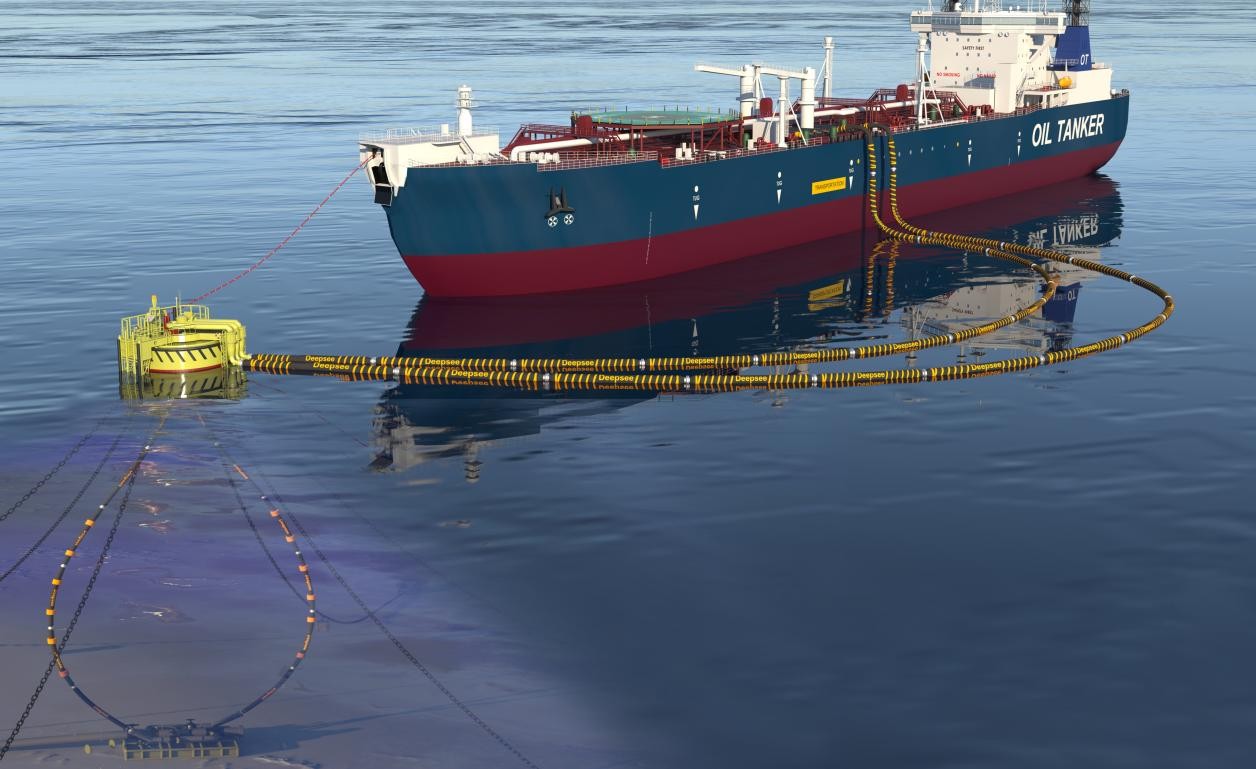
Floating hoses can be assembled from single or multiple pipe segments, including fence hoses, tail hoses, reducer hoses, main hoses and one‑end reinforced semi‑floating hoses. With years of profound technical accumulation in offshore hose manufacturing, Qingdao DeepSee Rubber Technology Co., Ltd.Ltd. develops high‑performance, reliable floating oil‑transfer hoses.
The products are available in single‑skeleton and double‑skeleton structures. The double‑skeleton hose adopts an innovative “hose‑within‑hose” design, with an auxiliary skeleton layer wrapped outside the main skeleton layer. Equipped with a leakage alarm device, it can quickly detect main‑skeleton failures and avoid marine pollution caused by oil spills, thus protecting the marine ecosystem.
Complying with relevant international standards, offshore oil‑transfer hoses from Qingdao DeepSee Rubber Technology Co., Ltd. Ltd. can be custom‑developed for different project conditions to adapt to complex offshore operating environments and lay a solid hardware foundation for the stable operation of the mooring system.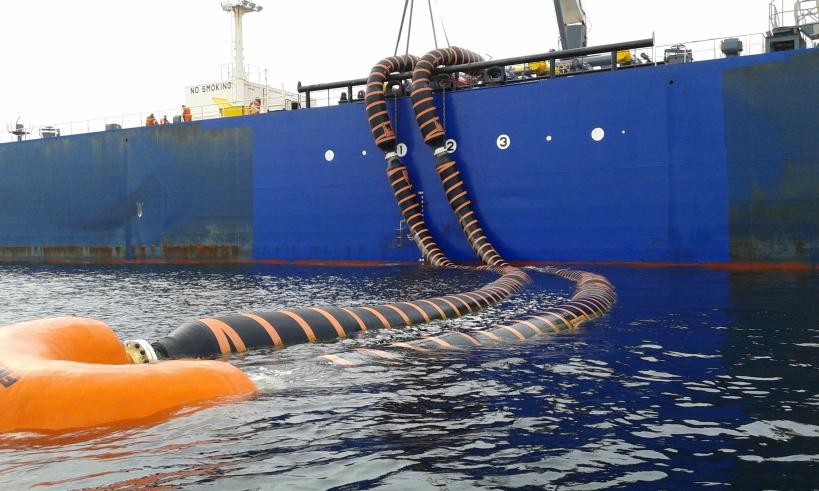
The buoy features a flat cylindrical structure. Its top is fitted with a 360° freely‑rotating turret, at the center of which sits a Product Distribution Unit (PDU) connected to the buoy via bearings. Radially‑arranged catenary anchor chains fasten the buoy to seabed anchor piles, delivering powerful mooring restraint to limit buoy drifting.
During field operation, tankers are moored to the buoy turret via mooring lines. Floating hoses build the transfer passage between tankers and the buoy PDU. Crude oil flows through sub‑buoy hoses to subsea manifolds and is further transported to onshore storage tanks. Thanks to the rotatable buoy, tankers can adjust their orientation flexibly under sea current, wind and wave loads, effectively reducing mooring loads and improving overall crude oil loading‑unloading efficiency.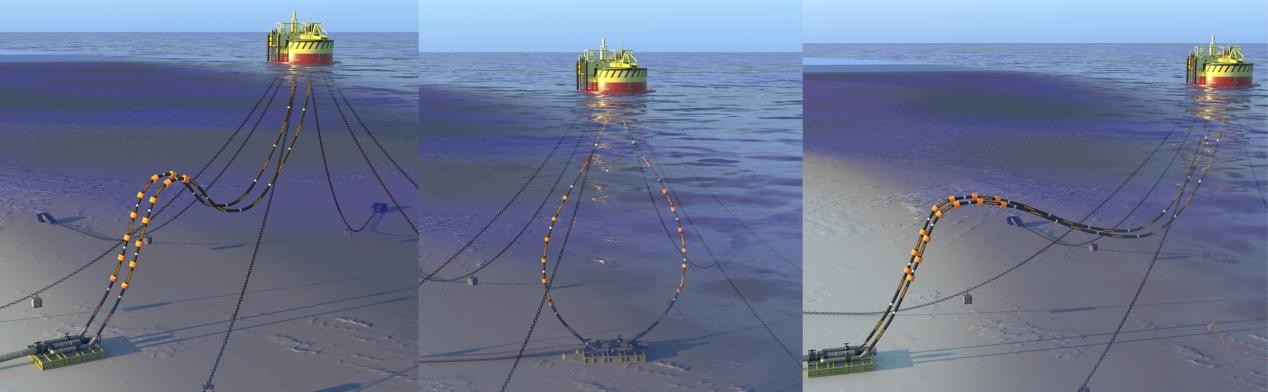
Subsea hoses are difficult to replace underwater with high on‑site construction costs, which sets stringent requirements for structural strength and service life. Qingdao DeepSee Rubber Technology Co., Ltd. Ltd. has rich practical experience in subsea hose design and manufacturing. Its double‑skeleton subsea hoses are capable of coping with severe offshore working conditions.
Common configurations of subsea oil‑transfer hoses include free S‑shape, small‑angle S‑shape and Chinese‑lantern shape. Tailored solutions from Qingdao DeepSee Rubber Technology Co., Ltd. Ltd. help customers cut later‑stage O&M costs and extend hose service life.
As a professional manufacturer of offshore pipeline products, Qingdao DeepSee Rubber Technology Co., Ltd.Ltd. will keep driving technical iteration of floating and subsea oil‑transfer hoses. We deliver high‑quality products and supporting services for the global offshore oil‑gas industry to safeguard the safety and reliability of the whole offshore energy transportation process.

