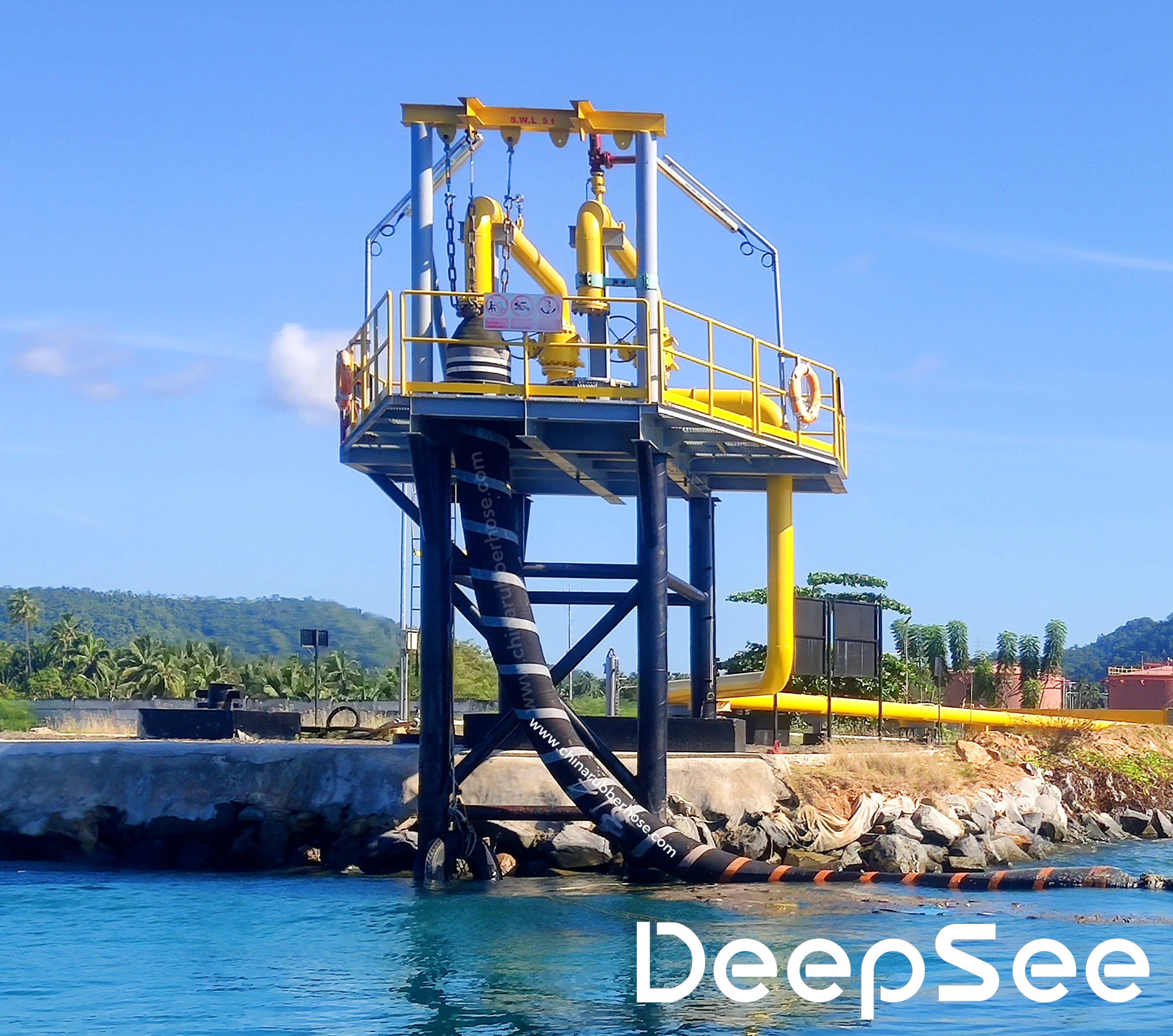
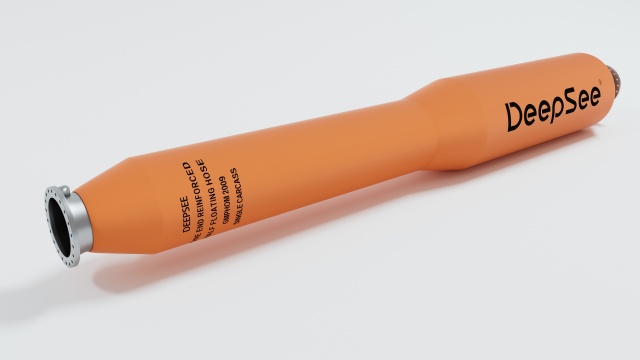
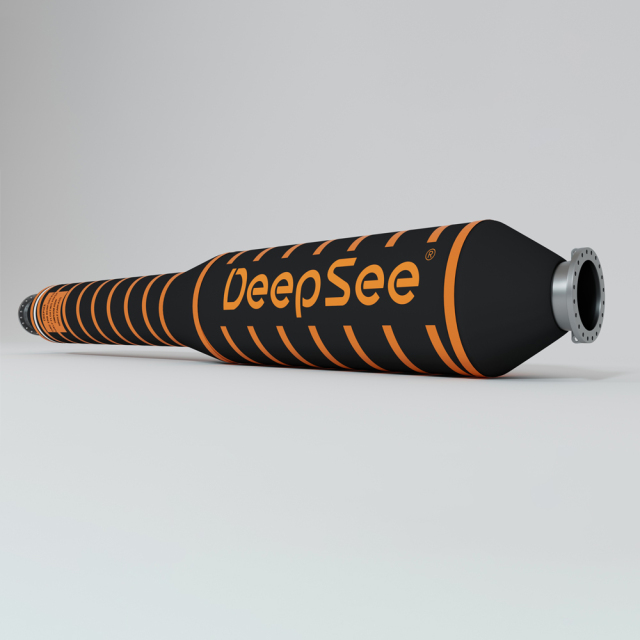
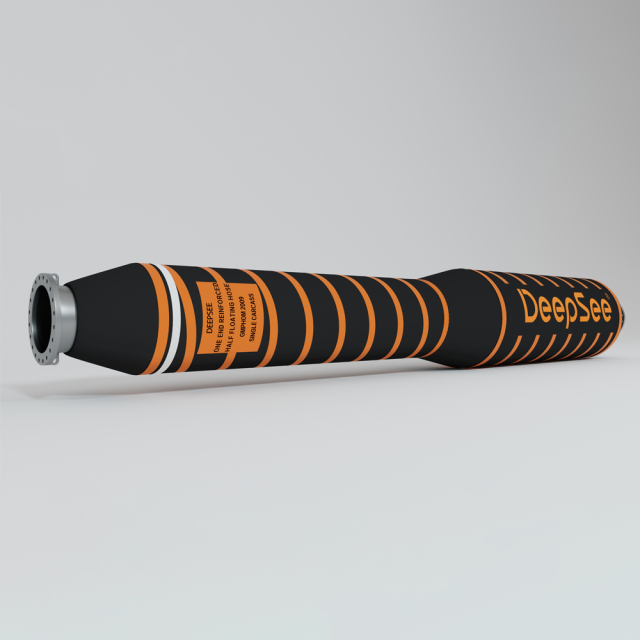
One end reinforced half floating hose connects the CALM buoy with the mainline full floating hose. In a floating hose line, all hoses are designed to be full floating except this first off buoy hose. Its reinforced end should be connected to the hard pipelines on the buoy.
Click to see Double carcass One end reinforced floating hose.
→Inner layer: NBR (Nitrile-Butadiene Rubber)
Feature: Resistant to fuel and oil; Smooth; Seamless
→Reinforcement: Multiple layers of high-strength textile cord + Embedded spiral steel wire
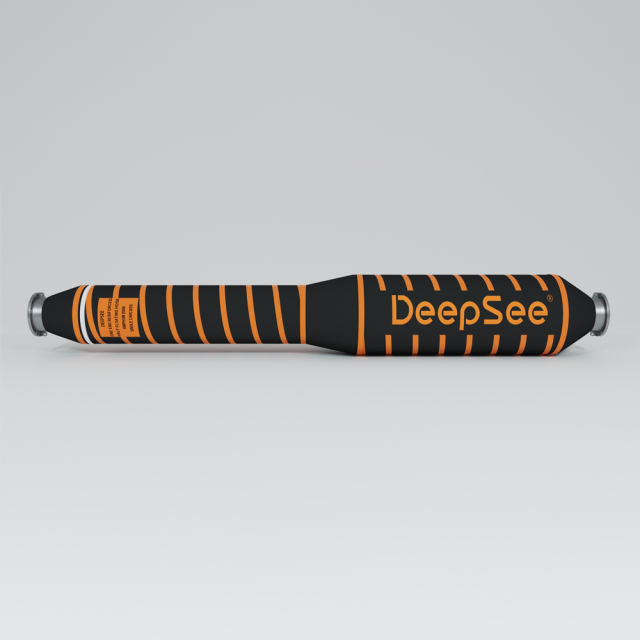
→Outer layer: Black synthetic rubber; Spiral orange stripes on the surface
Feature: Smooth; Resistant to abrasion, oil, sea water, and sunlight/UV ray
→Floating material: Closed-cell foam
→Minimum burst pressure: 5 × Rated Working Pressure
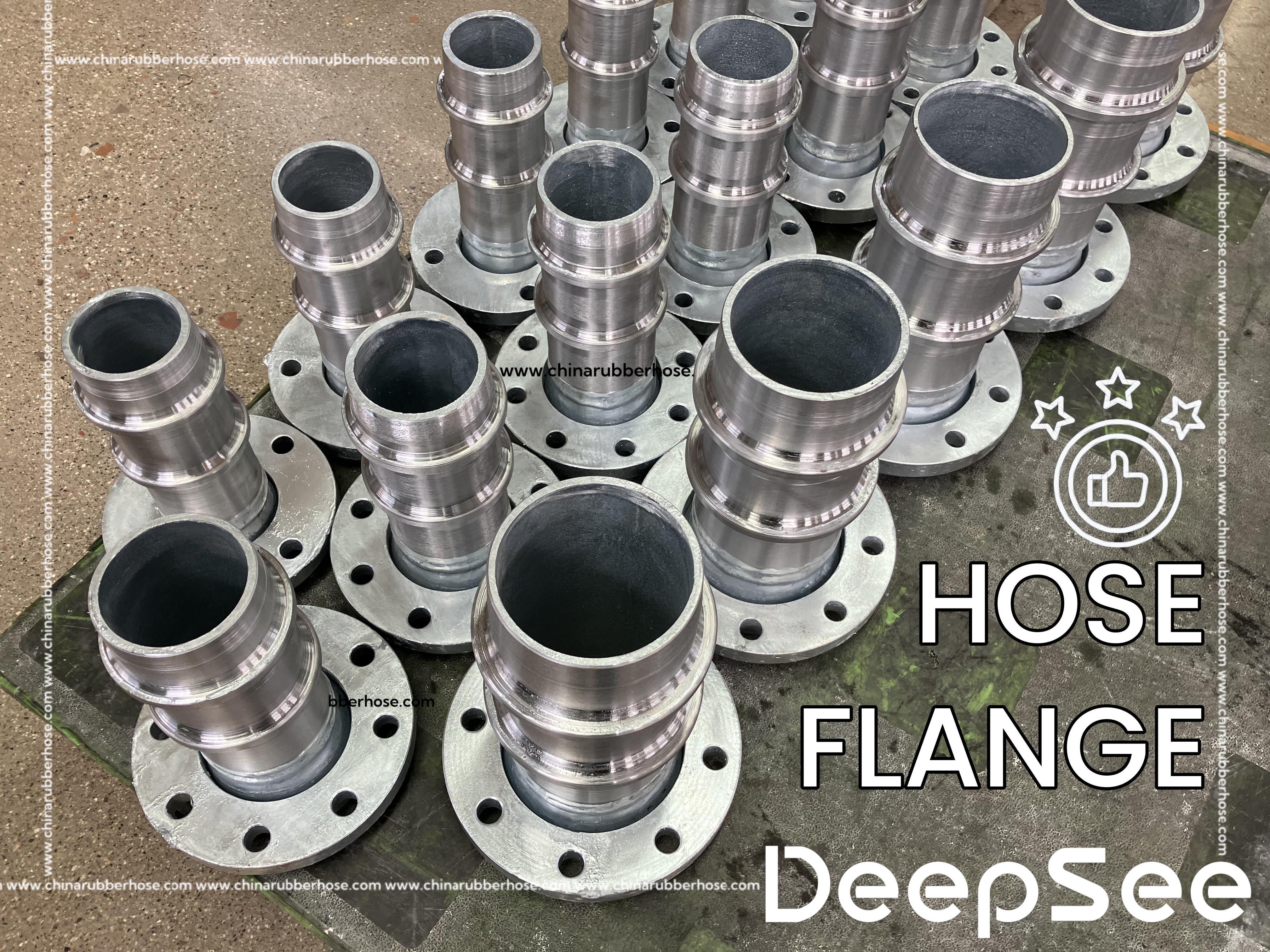
→Fittings: ASME B 16.5 (Class 150, 300, 400, 600, 900, 1500, and 2500) or other standards flanges according to customer's request will be welded on the raised face, flat face, or other required face of the hose neck. Flange material options include carbon steel and stainless steel. There are several welding and sealing methods for you to choose.
→Flange standard: ANSI, GB, JIS, or DIN.
Technical Analysis
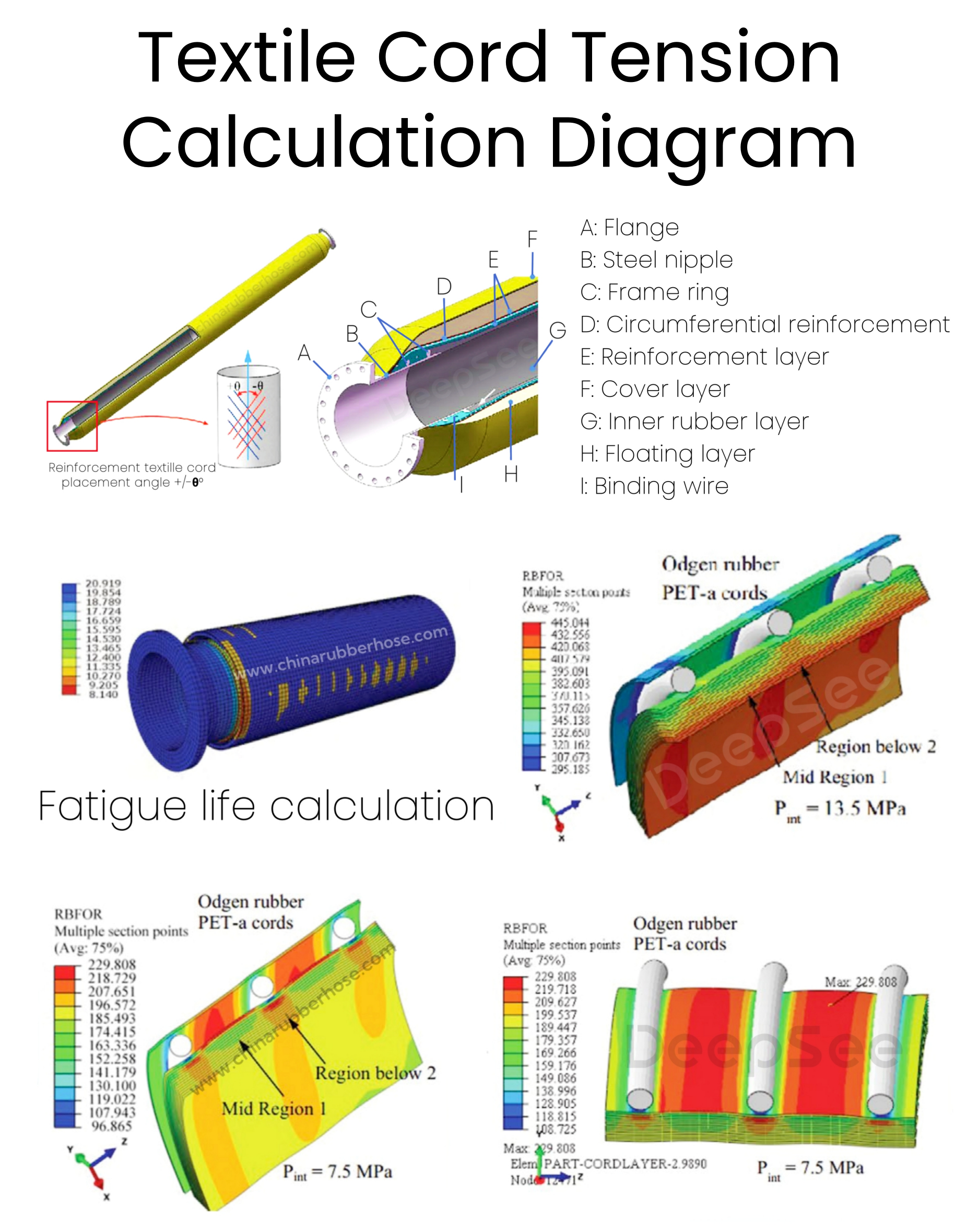
We use finite element analysis software ABAQUS to:
- Create a detailed local model of the hose to calculate hose strength, such as cord tension, rebar stress, rubber strain
- Build a detailed hose model and calculate the bending, tensile and torsional stiffness of the hose
- Calculate cord tension, rebar stress, and rubber strain under certain loads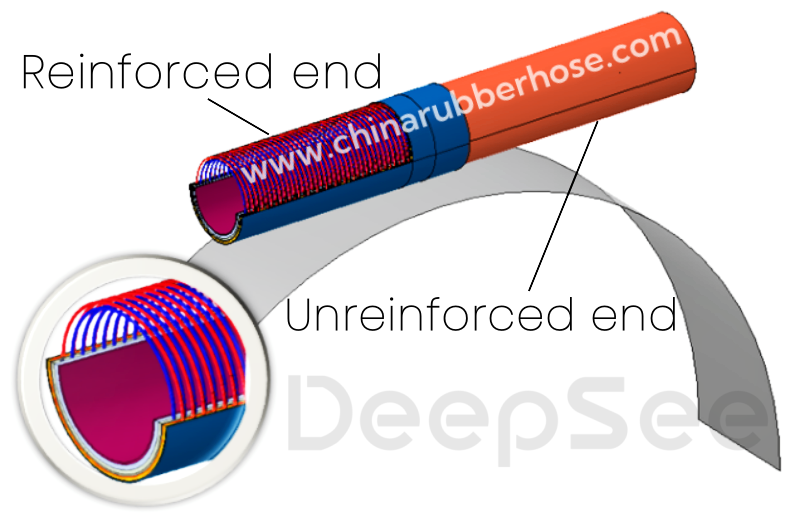
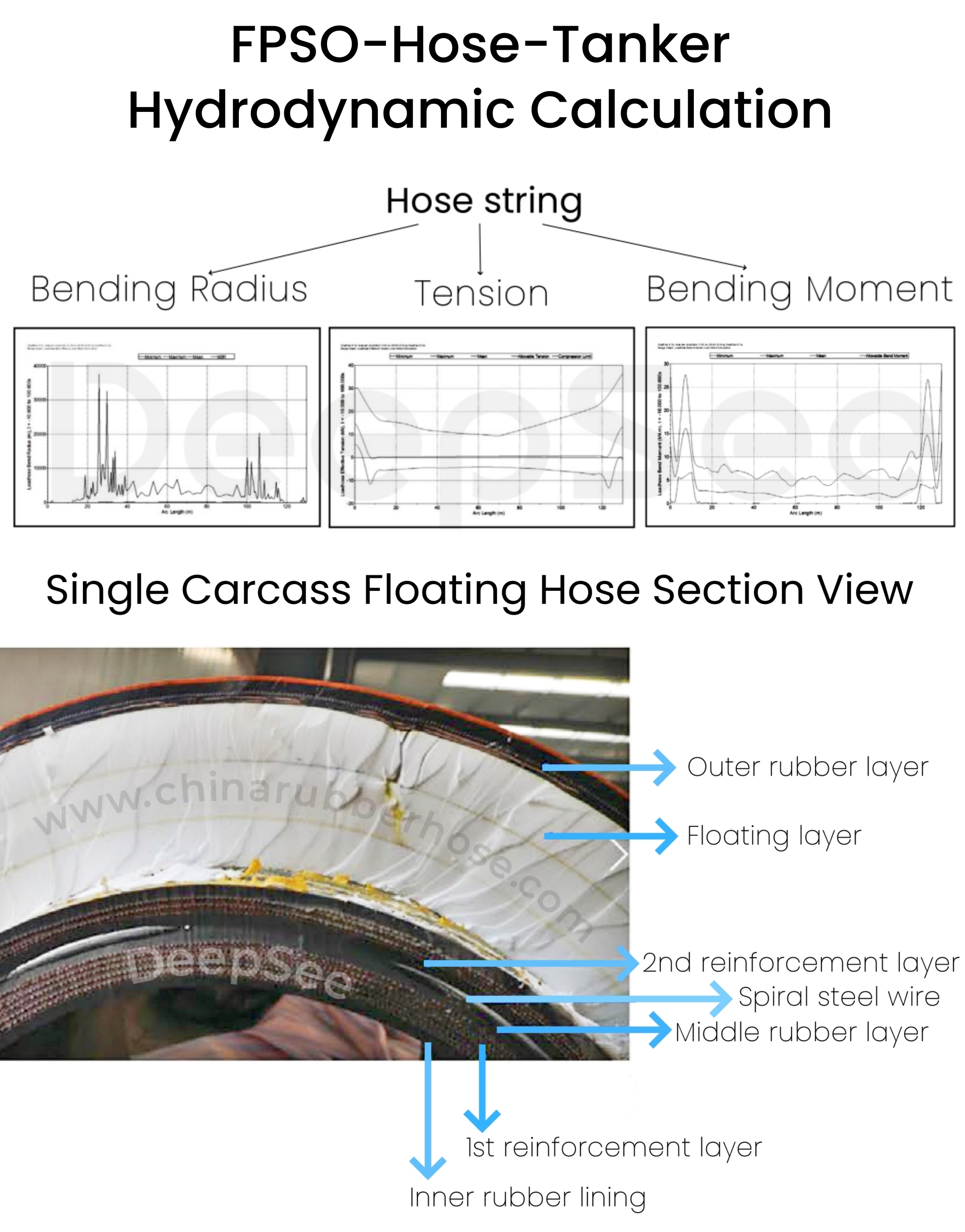
 When designing marine hoses, we do dynamic analysis and hydrodynamic calculations with the help of OrcaFlex. Dynamic responses of marine hoses are simulated under environmental loadings like wind, currents, and waves. For hoses are applicated in mooring systems like SPM, we analyze tension of mooring lines in different sea states and mooring point’s motion and displacement under various dynamic loads.
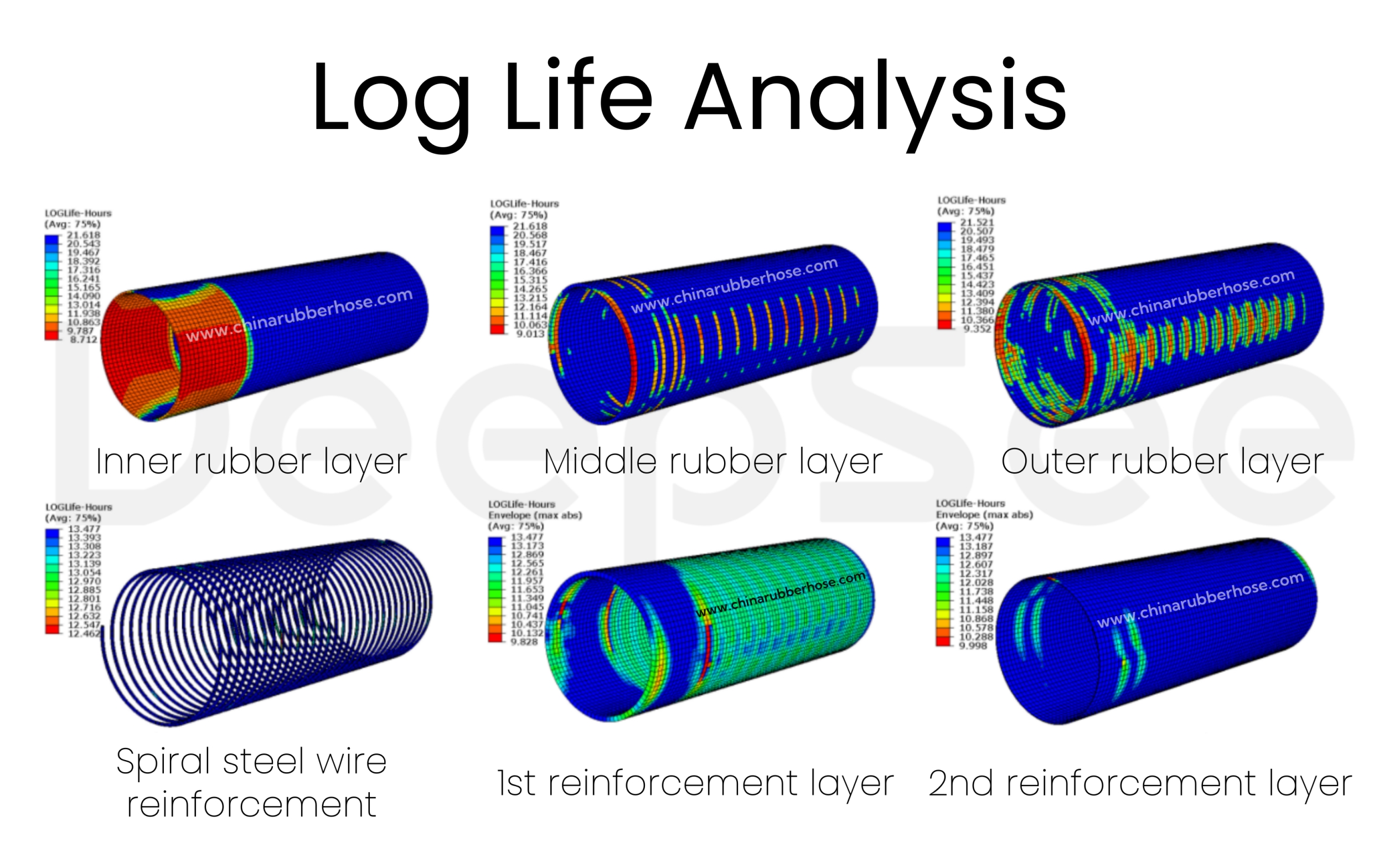
 Import the ABAQUS static analysis results into the fatigue analysis software fe-safe, select the fatigue analysis theory, set the material parameters of each structural layer, load the above load spectrum, and we can get the fatigue analysis results.


 When designing marine hoses, we do dynamic analysis and hydrodynamic calculations with the help of OrcaFlex. Dynamic responses of marine hoses are simulated under environmental loadings like wind, currents, and waves. For hoses are applicated in mooring systems like SPM, we analyze tension of mooring lines in different sea states and mooring point’s motion and displacement under various dynamic loads.
 Import the ABAQUS static analysis results into the fatigue analysis software fe-safe, select the fatigue analysis theory, set the material parameters of each structural layer, load the above load spectrum, and we can get the fatigue analysis results.


