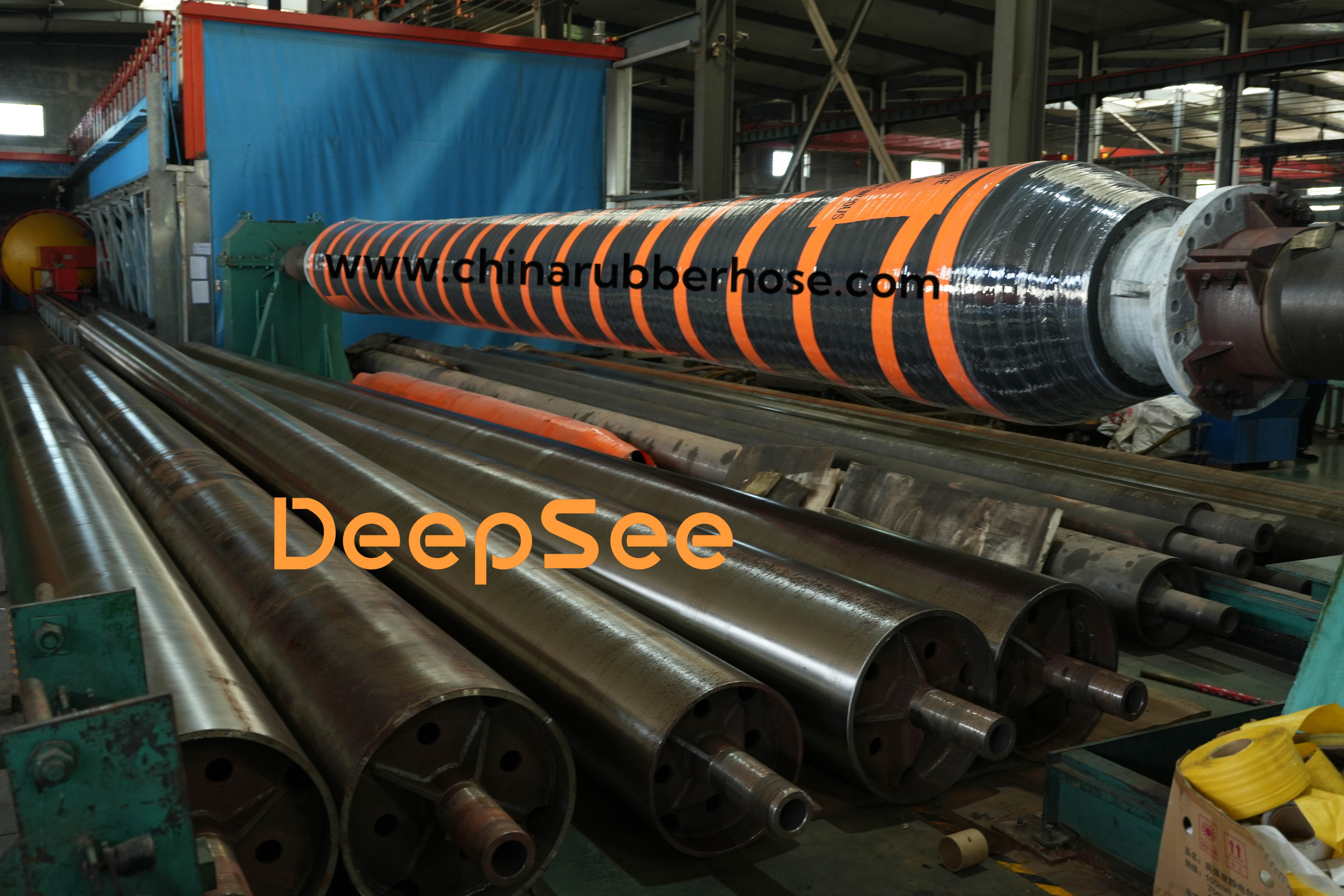
Tail hose is part of the floating hose string. It connects the tanker rail hose and the mainline floating hose. Sometimes, it can also be connected to the reducer hose instead of the mainline hose. This happens when the reducer hose is added to the floating hose line. 
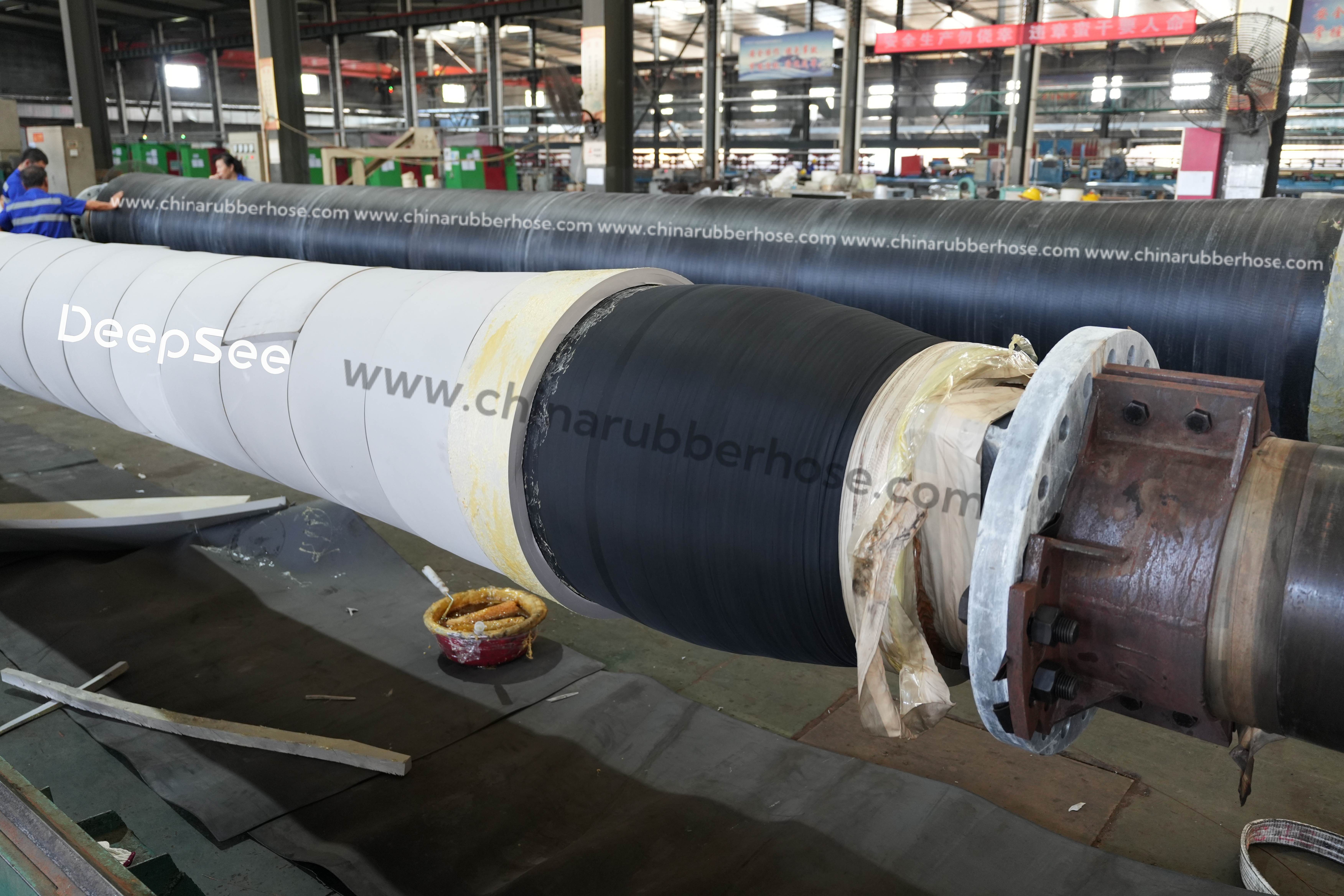 →Inner layer: Oil-resistant NBR (Nitrile-Butadiene Rubber); Smooth and fuel-resistant
→Reinforcement: One embedded helix steel wire + Multiple layers of high-tensile polyester textile cord
→Cover: Black, smooth synthetic rubber + Spiral orange band; Good resistance to weather, abrasion, sunlight, ocean water
→Floating material: Closed-cell foam→Minimum burst pressure
Primary carcass: 5 × Rated Working Pressure
Secondary carcass: 2 × Rated Working Pressure
→Fittings: ASME B 16.5 (Class 150, 300, 400, 600, 900, 1500, and 2500) or other standards flanges according to customer's request will be welded on the raised face, flat face, or other required face of the hose neck. Flange material options include carbon steel and stainless steel. There are several welding and sealing methods for you to choose.
→Flange standard: ANSI, GB, JIS, or DIN.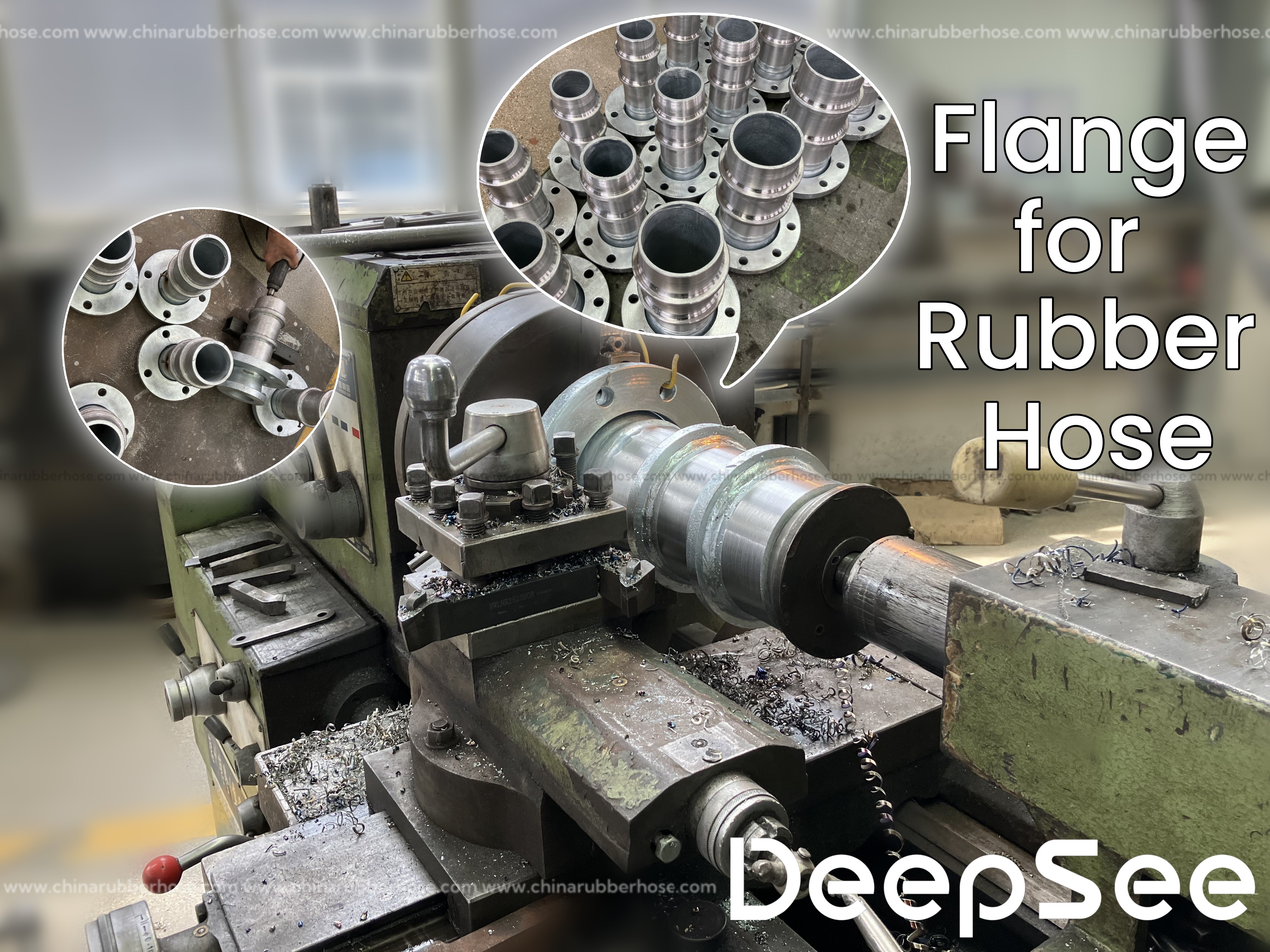
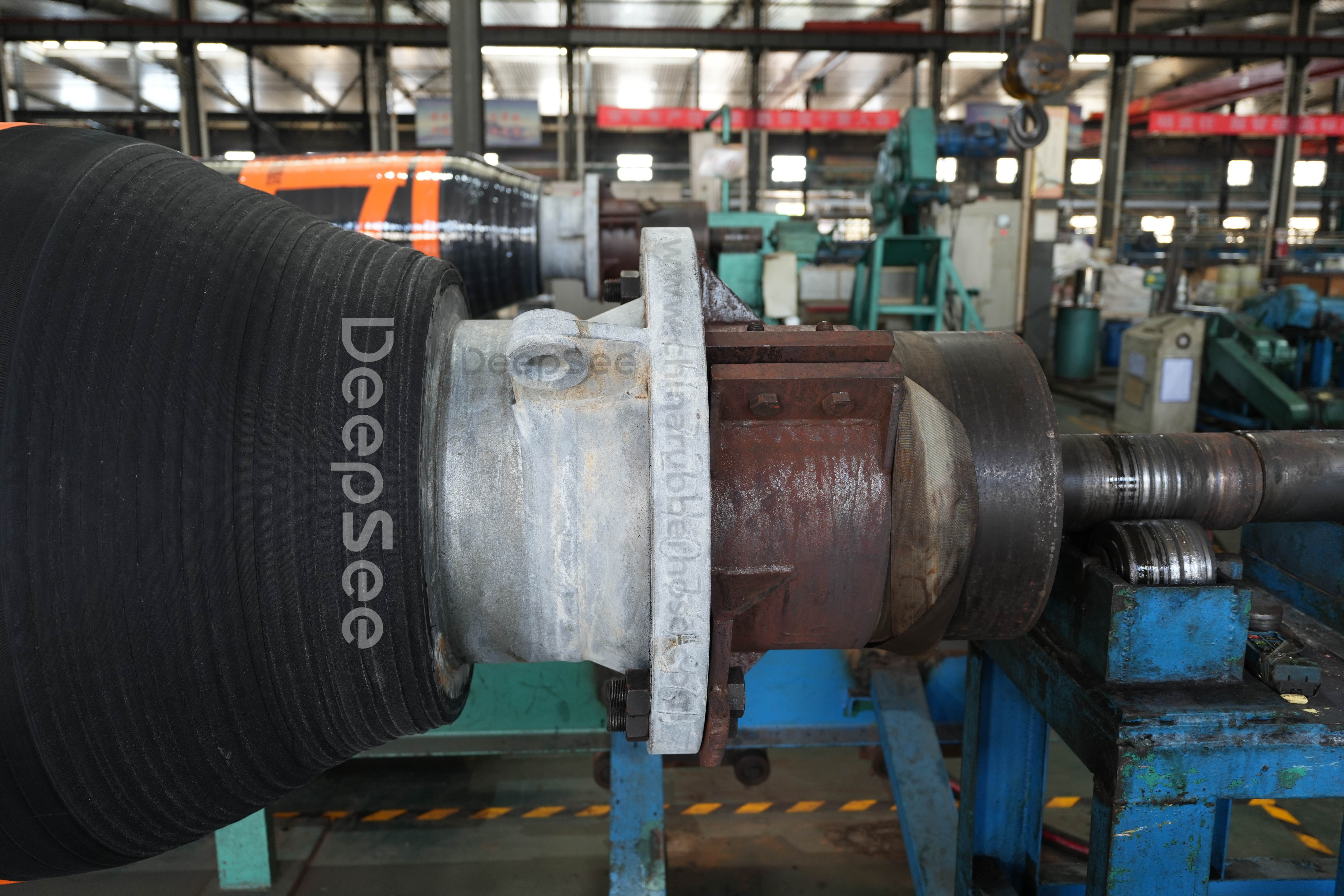
Design, manufacture, testings and operations are in strict accordance with OCIMF guide GMPHOM 2009 and customer's requirements.
Test Report & Technical Analysis
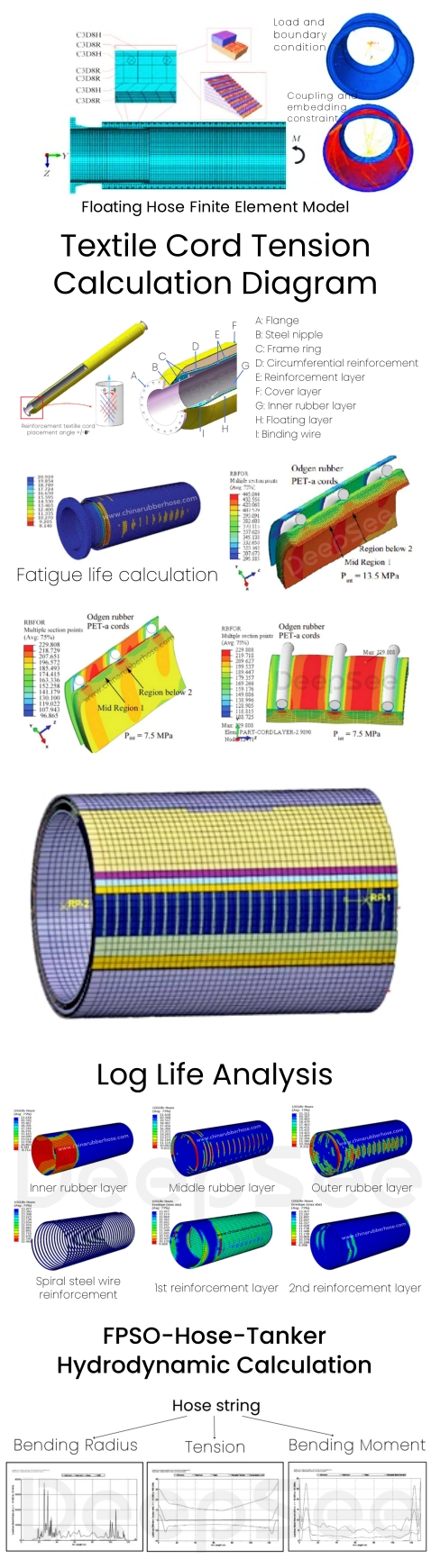
By doing Finite Element Analysis (FEA) with Abaqus, we focus on both the overall behavior and local details of the marine hose. We simulate temperature changes and hydrodynamic effects and analyze static and dynamic structures. Strain, stress, and deformation of the hose assessed. We can obtain accurate data, such as flexural, tensile, and tensional stiffness of the hose, rubber strain, cord tension, and reinforcing steel stress.
Import the ABAQUS static analysis results into the fatigue analysis software fe-safe, select the fatigue analysis theory, set the material parameters of each structural layer, load the above load spectrum, and we can get the fatigue analysis results.
By using the hydrodynamic software ORCAFLEX, we calculate floating hose data, such as bending moment, torque, and tension, and compare the results with design allowables. Environmental loads such as wind, wave and currents, as well as the excitation oscillations of FPSOs, tankers or moored buoys, are considered.